So between working for the man,
lounging in the sun and entertaining you fine people, I also find time to share
my two cents on flurtsite.com.
Flurt is an Edmonton-based non-profit with the goal of empowering young women.
You can think of it as a result of that one beautiful night that Cosmo and
Adbusters share under the boardwalk while Bob Seeger played in the background.
There are many talented writers
sharing their thoughts on the site, and I highly recommend checking some out.
But since this is my blog, I'm going to direct you to the two articles I've
written.
Here I'll introduce you to a lovely young lady
with something to say about legalized abortion. Check out the comments to see
some random tell me I should be ashamed of myself. (I'm not.)
For less controversy, check this out. Disney tries to create a heroine
that isn't sorta lame. Are they successful?
As you can see, I haven’t been expending a whole lot of
energy on blogging endeavours. That’s because I’ve been enjoying all the summer
has to offer! Beaches and beers on patios and what have you.
I’ve also been enjoying some reading that doesn’t strain my
neurons too terribly. It’s no Twilight, but here are a few numbers that I think
are pretty accessible. Read one, and do your part to combat Fifty Shades of
Grey mania.
1. Spadework – Timothy Findley
I’ve read a fair bit of Timothy Findley and he never fails
to please. His prose is what you might call Hemingway-esque: he says a lot with
a little. Findley is one of those great writers that you enjoy as a beach read,
or as a thesis paper—he creates enough plot to keep the pages turning, but if
you want to go deeper you can see he’s saying a whole lot more than what it
seems on the surface. Psychology and psychosis are prominent themes in most (or
maybe all) of his work, and the dark recesses of the mind and universality of
corruption and weakness play heavily the characters here.
All that said, this was not my Findley fave. It started out
like a Nicholas Sparks novel, i.e. a lot of description about what the heroine is
wearing and exactly how happy she is in her perfect suburban life. Golly gee! But then we discover there is actually
nothing picturesque about it. Like a beautiful summer day that dissolves into thunder and lightning and winds that tear down street
signs, the darker side of human nature quickly rears its ugly head.
Then all kinds of crap happens! Obviously I won’t go into
detail, but to tempt you I will say that Findley has a nifty way of
working sex into many facets of his characters. It runs throughout the novel,
but there is one really weird sex-capade (for lack of a better word) that may
almost cause you to stop reading. Listen to your heart. If it tells you to
stop, do, because you probably can’t stomach the rest of what Findley has to
say about YOU, the reader. And all of us. He’s very Jungian, you see.
2. Rules of Civility – Amor Towles
There's not a whole lot you can do to make a photo of a book interesting.
Twenty dollars says this novel is made into a movie inside
five years. It’s got all the makings of a thinker’s blockbuster: Depression-era
New York, a plucky heroine, a love triangle. And it works the rags-to-riches
angle, which is as much a fantasy now as in pre-war USA.
It starts out strong—nothing catches and holds my interest
like a glorious Model-T smashup resulting in an alarming disfigurement. Whenever
we drive past a fender bender I cry to Mitch, “Rubberneck! Rubberneck!” This
stems from my early days in the ’Skatch. We didn’t have computers, or cable, or
sock puppets to amuse us, so we relied on other people’s misery. It remains the
job of the passenger to paint me a poignant word picture, because I’m a
responsible driver who keeps both eyes on the road at all times.
But anyway, things went downhill from the crash… or through
the windshield, as it were. It didn’t exactly crash and burn (there’s a wealth
of wordplay opportunity here) but there was definitely a steady decline. Most
importantly, I felt like the authenticity waned as things went on. There wasn’t
nearly enough 1930s slang for my taste, although the cigarette holders and
martinis were plentiful. And frankly, the heroine kind of irritated me. Her
name was Katey Kontent. Kontent? It’s reiterated several times in the book that
“it’s pronounced kon-tent, like the state of being,” so I suppose Mr. Towles
was trying to get at something with this. Is it that Katey will always take
what she has and be thankful? Or is it that she’s just the opposite? I sure don’t
know, so read it yourself and find out. Either way, I personally have never
encountered a Russian immigrant whose surname began with anything other than “ov[a].”
My final beef is that the primary love interest’s name is
Tinker. Tinker. That’s something my grandpa used to do with his train set, or
something my dad does to the dishwasher when he’s too much of a he-man to call
a professional. It’s definitely not glamorous. Certainly not the name of someone you’d trust to show you the town in
style. But then again this was the era of the nickname, so maybe the
ridiculousness of the moniker positively correlates to the attractiveness of
the gentleman. At any rate, I’ll leave it to you potential readers to decide
how attractive Tinker really turns out to be.
3. I’m Starved for You – Margaret Atwood
Ah Margaret. I’ll never have anything bad to say about you.
This is a short story released exclusively in electronic
format, proving that Ms. Atwood, at 72, is still totally fresh and hep with the
times. Like Findley, she probes into the soul of the everyman and shows us
exactly what we all hate in ourselves. And I love her for it.
But at the same time, she scares the crap out of me. Here
Atwood takes us into the not-so-distant future, somewhere between now and Oryx
and Crake-era, and concisely illustrates what a mess we’ve made of things. In
this particular dystopia the economy has disintegrated and the lack of jobs and
stability has caused society to turn on itself. The solution: get people to
volunteer as inmates. They spend every other month in custody, interspersed with
months spent as civilians. Sort of a giant, sinister make-work project.
There’s not much more I can say about this because I have
nothing to criticize, and it’s so short that to say anything is to say it all. But
Margaret gets it, man. She sees what we’re all afraid to see and puts it down
on paper, or its electronic equivalent. She too can say a lot with a little,
but she’s more inclined to throw in a savoury word or brow-furrowing metaphor
than Findley, which makes her writing a lot more fun to read out loud.
So that’s it. Despite my little barbs I actually recommend
all three of these books, especially for a pleasure read this August on the
beach, or if you’re in Edmonton, huddled by the fire. They may not be
Shakespeare, but I didn’t feel my brain melting to mush as I read, either. So
have at ’er!
Saturday was a glorious day here
in the city, so I decided to take my camera downtown and creep on people. And do
other things.
I also bought asparagus.
I don’t have one of those fancy
zoom lens things, so in order to properly creep I had to get pretty close to my
subjects. I kept expecting someone to yell at me, or some law enforcement
professional to get up in my grill about privacy, but I guess I’m stealthy
enough to avoid such inconveniences.
But as an aside, does anyone know what the laws are regarding taking
photos of people in public places? In San Jose I was taking photos of some
pretty buildings and a cop stopped me, since apparently people live in those
buildings and there’s a chance I could catch a shot of exposed hiney in a
window or something. It’s a good thing he said something, since that was the
shot I was looking for. Additionally, a pool I worked at prohibited photos
because unconsenting bystanders could be caught in the background. So. Anyone?
There are a few things I actually
love about living in Edmonton, and the 104th Street market is one of
them. Farmers’ markets in general are pretty great for their selection of
locally produced goods and weird people to watch, but the 104th
Street market has the added appeal of being outside, downtown, on a street with
several restored historic buildings. The mixture of urban and rural, modern and
historic is downright nifty.
See? Urban - rural, today - yesterday.
A bit overblown... the sky was blue, FYI.
I think he wanted watermelon.
I like it when things hold still.
Meet.
Greet.
Later I headed over to the Works
festival, where I encountered another Edmonton thing I like: the
fountain/wading pool in front of City Hall. There, I discovered my camera has
the shutter speed capacity to catch water droplets in motion!
A bit dark, but you get the idea.
Probably my favourite of the day.
Feel free to leave comments—good
or bad—especially if you know something about photography. I changed my
settings so you can now comment anonymously without logging in, AND you don’t
have to prove you’re human by repeating wonky non-words. I’m desperate for
validation, people!
Hey
Heaviside. 1971 called. They want their record back.
If that
sounds like an insult, it’s not. Think back to 1971. It was a glorious time:
people strutted around in mismatched plaids, cars were as long as city blocks,
and pop lyrics were more along the lines of “There’s a lady who’s sure
all that glitters is gold / And she’s buying a stairway to heaven” than “You a
stupid ho.”
Yes,
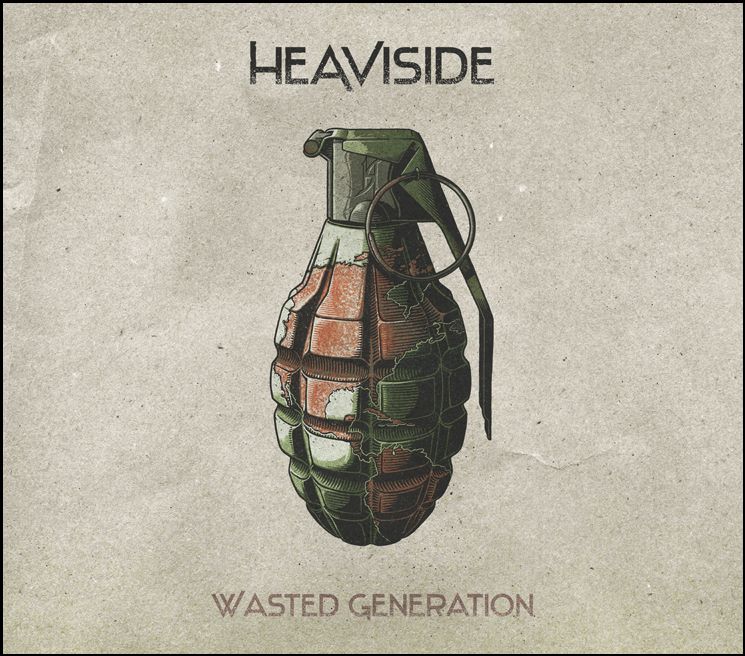
Heaviside’s debut Wasted Generation
is loud, it’s riff-driven, and it’s retro. If you’re into solid block chords
and in-depth lyrics about plugging that special lady, you’ll be disappointed
here; this is a band that puts the music first, and all the other stuff a
distant second. In a day and age when music is as much a product as a drain
cleaner or an antidepressant, it’s nothing short of inspiring to find a band
who puts their values before the prospect of cash and commercial glory.
Nowadays,
perfect pitch is just a mouse click away, but Heaviside decided to take an
alternate route: actually playing their own instruments. Rest assured that
everything that hits your ears on this record, from every thunderous drumbeat
to each full-bodied vocal howl, is the real deal. This is the auditory
equivalent of good hearty whole-wheat bread from Grandma’s oven; no acetylated
distarch adipate or butylated hydroxyanisole here.
The album
starts off strong with the noisy, energetic “War Machine,” a tune that seems
tailor-made for a Michael Bay movie. The explosions! The frantic excitement!
The track practically begs to be cranked up and blasted out of the windows of a
car that may or may not actually be a Transformer.
And the
energy doesn’t taper from there. Track after track the adrenaline builds,
peaking with the singalong debut single “Lady.” With its steady bass groove and
easy-to-learn chorus, this is a track just made for the arena.
In fact,
this whole band is made for the arena. The kind of energy they bring to the
stage can’t be contained in small clubs. If you’re in the Edmonton area, check
out a live show. You may think you’ve seen sweaty, but until you’ve seen
Heaviside in action, you haven’t. The band is all over the stage, throwing in
the odd high leap or behind-the-head solo, and their audience is always equally
engaged.
The band’s
influences are far-flung. There’s a distinct similarity to Wolfmother, and “Aurora”
echoes Priestess. Singer Mitchell Reynaud’s vocals compare to shrieking majesty
of Chris Cornell, guitarist Johno Hermary’s nimble picking (and onstage attire)
are reminiscent of a certain man in a hat, and the overall Zeppelin-esque
impression is undeniable.
This is a
band that’s well-read when it comes to classic rock. They know what’s good. So
it’s no accident that the band went with the title Wasted Generation. You can hear it in the closing track—“Oh wasted
youth, lost in time, lost in the basement.” That’s where most of today’s youth
are, at least in terms of music.
Let’s hope
that Heaviside makes it big and today’s wasted youth, who have cut their teeth
on Rihanna and Nickelback, will learn that music is not limited to inane drum
beats, strobe lights and one-liners deriding female sexuality.
On day two of our vacation, we
took the train from Davis to San Jose. What a fine way to travel! Smooth,
inexpensive and energy efficient. Too bad Canada hasn’t caught the wave. While
I’m on the topic, the public transit in California was cleaner and cheaper than
Edmonton’s, and the light rail ran directly on the street. This suggests that
the transit-riding population is sharper than that in Edmonton as well… maybe
just because their brains aren’t addled with cold.
Anyway, we got to San Jose,
walked to our hotel, had a look around, took Mitch out for some birthday pub
food and beer, marveled at the comprehensive Happy Hour (ALL drinks on special,
not just whatever the bar overstocked!), and took off for HP Pavilion and the
Boss!
BROOOOOOOCE!
Everyone we talked to in San Jose,
including a kindly vagrant, asked if we were there to see Bruce, and that’s one
reason I was excited to see him in the States. He’s a much bigger deal there.
And this is the same reason I was stoked to hear him play “Born in the USA,”
which he didn’t (spoiler).
Bruce was fashionably late—nearly
an hour—taking the stage, but he made up for it with a THREE HOUR SET. I must
say, I was impressed. When I’m his age I hope to be breathing on my own, never
mind crowd surfing and doing wicked back bends.
He really puts the "sex" in "sexegenarian."
During my pre-Mitch party years,
I knew very little about the Boss. I knew he had a song called “Glory Days”—it’s
the only Springsteen song my hometown radio station seemed to have in their
catalogue. And that’s about all I knew. Growing up in small-town Saskatchewan
pre-MySpace could really limit your musical knowledge.
Oh man these guys are my fave!
I’ve tried not to let Mitch have
too much influence on my musical taste, and he hasn’t. Mitch loves music in a
broad sense, a quality that leads him to listen to a lot of crap.
Including but certainly not limited to this. AGGGGHHHHH.
But Bruce is his all-time
favourite, and fortunately this is something I can really get behind. Springsteen
is like the personification of the Olympics or September 11: he has the power
to speak to a zeitgeist (assuming I used the word “zeitgeist” correctly) and
unite a culture through the good and the bad.
There are times when I really don’t like people—they can be such messes,
with all their insecurities and conceits. But Bruce’s music can really make me
happy to be one of them, stumbling along from point A to point B, with all the
joy and misery that may fall in between. It's easy to forget our differences to a soundtrack of Boss tunes.
For example, in the merch line I
really bonded with a gentleman with a heavy tan and a sleeveless t-shirt from
Reno. We got along swimmingly, at least until he found out I was Canadian. Then
he looked at me like he suspected I was trying to sneak gay married people and
free healthcare into his country. The humanity!
But back to the show.
At the show. As you can tell by my face, the wine and the Red Bull are really fighting it out in my system.
The sustained energy! The sheer
entertainment value! Bruce was accompanied by most of the E Street Band, with
the notable omission of Clarence Clemons—the legendary Big Man behind the similarly
legendary E Street sax, who died last year. Filling his size 98 (or so) shoes
was the Little Big Man, his nephew Jake Clemons, who led a horn section with a sax sound
almost as big as that of his predecessor.
Big sax sound.
But there is a definite reason
for Springsteen’s sustained popularity, and the live show he consistently puts
on, even after 40 years in the biz, is only one reason. As world-weary as his
tunes have always been, Bruce clearly loves performing.
The set consisted of plenty of
material from Wrecking Ball and other
works from the past decade, particularly the similarly dark The Rising. He skipped over the
E-Street-less misstep that was the 1990s, opting instead for a hearty helping
of classics including a few deep tracks, a soul medley and fully half of Born to Run.
The Boss worked all kinds of
crowd participation into the show. He seems to genuinely love his fans, and God
knows the crowd loves him. At several points, he left the stage and walked
through the crowd—not on a catwalk, but actually through the fans on the floor,
at their level. And then he crowd surfed back to the stage. Way more humility,
trust and respect than I would expect from a star of his caliber.
It was really a family show too—he
worked ballads into his high-energy set, giving the boomers a chance to sit
down and take a load off. You could almost hear a sigh of relief as the band
struck up the melancholy “Jack Of All Trades.”
And things were fine at the other
end of the age spectrum too—a little E-Streeter joined the Boss onstage for “Waiting
on a Sunny Day.” He knew all the words too, which just warms my heart. And a
girl of about 12 took Courtney Cox’s place onstage for “Dancing in the Dark”—although
I think her dad was more thrilled about her moment in the limelight than she
was.
The high point for me came with “Thunder
Road,” my favourite Boss tune and the main set closer. Thanks to the magic of
YouTube, you too can enjoy it:
We left the arena aching and
stimulated from head to toe, just as Bruce said we would. And that was the
night it was. But just like a photo can’t compare to an amazing view, a blog
post sure won’t do the Boss justice. Some things are just meant to be
experienced.
We began our journey at the
bracing hour of 4 a.m., when we set off for the scenic Edmonton
International Airport. We started the day by knocking back a few buffalo wings, just like we do every morning.
Breakfast of champions.
Two layovers, three flights and a
bus ride later we were in sunny Davis, California, a Lethbridge-sized college
town just outside of Sacramento. One of my favourite things about traveling is
the first few breaths you take in a new place: the feel and smell of the air
lets you know you’re far from home, better than scenery or language barriers
can.
Compared to Edmonton’s dry
continental air, Davis was humid. I had been checking the Weather Network obsessively
in the days leading up to our departure, and I was not thrilled about what I
saw: a high of 23 degrees on Monday was the highest the temperature would get
while we were in California. But I was thinking an Edmonton 23, when you still
need long pants, a jacket and closed-toed shoes since the gust of a north wind
or a moment of cloud cover bring recurring shivers. But no—this was a
California 23, sunny and humid.
Davis would be a great place to
live. It was just my style, and just my pace. It was green, clean, well-treed
and well-maintained, and according to Wikipedia, it holds the title of most
bicycle-friendly city in the United States. Environmentalism? Garbage-free
streets? Pretty flowers? I’m in.
Davis, California: pleasant.
Edmonton, Alberta: unpleasant.
The college students probably accounted for a large number of the bikes. And since they're so educated (if not as educated as the good folks in Arlington, Virginia... see joke set up below), they also know that eating and shopping local is the way to go; hence the abundance of
independent businesses that lined the lush green streets. Unless they were just
weird American chains that I, sans cable TV, had never heard of.
Unique, small-town character.
Oddly enough, even though they
have the weather to enjoy them for more than three weeks each year, the city
was lacking in patios. This made me nervous. As many of you know, I love
nothing more than a good patio, and a holiday without one is like Alberta without environmental exploitation: it's just not what you came for. But don’t worry—we found one!
Doesn't look like rain, does it? Yeah, we didn't think so either.
Davis is also supposed to be the
second most educated city in the country (after Arlington, Virginia; see punchline above), which is surprising considering the
number of people we saw biking around without helmets. For a country that's dragging its feet towards universal health care, they're surprisingly laissez-faire about head injuries.
At the centre of the city is the
large UC Davis campus on which Mitch and I got lost trying to find our first
reason for being in California: The Shins, in the flesh. Gather around, and let me tell you what it was like.
I’m not even going to tell you
about the pretentious hipster opening band. Their music was sorta okay, but the
lead singer stored his collection of wooden flutes in a buckskin quiver thing
slung casually over his shoulder. Enough said.
The Shins opened with “The Rifle’s
Spiral” (which I so accurately predicted), and I immediately knew that I was
going to like them live. As you may recall from my review of Port of Morrow, the tune was too Broken
Bells-y for my taste. Not so in real life. It was more rock and more real
without the production. It could have been the Shins from ten years ago.
I probably know the Shins’
catalogue better than that of any other artist, and as such I was probably more
excited than I’ve been at any other show, ever. What song would they play
next?!? Would it be better or worse than the recorded version, or just
different? As the band cruised through its set, it became clear that the answer
would never be “worse.”
The band was high energy, James
Mercer was far less depressive than I expected, and the crowd was nothing but
enthusiastic. Some stood throughout the set, but when the band struck up “Caring
is Creepy” mid-way through, nobody sat down again.
The crowd was great, too—just the
right combination of enthusiasm and respect, showing the band ample love but
not letting their own show overwhelm the one on stage. With the exception of
one person: the young gent right in front of me.
He was a real special guy. Even
his girlfriend couldn’t stand his hoots and whistles and requests for songs recorded
by other bands. But enough about him. This show had so many pros, this single
con isn’t even worth mentioning.
The venue wasn’t huge—about the
size of Edmonton’s Jubilee Theatre—and it was well-selected, catering to the
band’s college-aged fan base. Less convenient for me, being 2500 km from home
and in the middle of a labyrinthine campus. Even Google Maps couldn't find this venue.
The highlight of the evening was “New
Slang,” my fave Shins song. It was a quiet tune but the whole band was
involved, and the vocals of Jessica Dobson (who wasn’t with the band when the
song was recorded… just like everyone else in this lineup except Mercer) were
just lovely indeed. Also its cool that the lead guitarist of an (otherwise)
all-male band is a girl. Estrogen power!
Like this... but with class. And talent. Actually, nothing like this.
The set closed with a great
rendition of “Sleeping Lessons,” which, like the rest of their set, was more
energetic than its recorded counterpart. The only complaint I have about the
show (besides the guy in front of me) is that, at just an hour and a half, it
was too short! Granted, they don’t have a huge catalogue to work with, but I
was left wanting much much more. Fortunately, the Boss made up for that the
very next night. (Spoiler!)
I’ll leave you now the way the
Shins left me: with “Sleeping Lessons.” This video pretty much sums up the
performance. The energy! The dynamics! The appropriately-timed
woos of the crowd!
I really wish the band would come
to Canada. I could certainly handle seeing them again.
For those
of you who don’t know, I spent most of last week in the slightly sunnier climes
of California. I’m currently working on a couple of posts about the trip and I
hope to post the first tomorrow.
But in the
mean time, I’m inviting you guys to check out my online portfolio! It has all
kinds of goodies from my illustrious writing career, along with a pretty sad
photography section. Conspicuously absent is material from my current place of
work; that’s because I haven’t yet figured out how to mention the company I
work for without falling victim to Google Alerts. They truly are watching us,
people.
There was a time when I chose
wine based on two things: price, and the level of hilarity represented by the
label.
Sometimes I still regress
to that point. I bought this just two weeks ago:
Only $12!
But as a sophisticated woman of
the world, and one who now proudly owns a copy of Wine for Dummies, I’m working on developing a taste and knowledge
of wine. Words like “bouquet,” “tannins” and “palate” are working their way
into my lexicon. One day I feel I’ll be able to discuss a bottle with equally
pretentious people without adopting an affected English accent and donning an
imaginary monocle.
Beyond its taste and intoxicating
quality, here are three things I love about wine:
-it’s historical
-it’s international
-it allows me to turn drinking into a hobby
I love history, I love travel,
and I love spending my days in a nauseous haze. I’ve found my true passion in
life.
1. Historical
Wine is one of the world’s oldest
beverages. At certain times and places throughout history it has even been more
popular than water—such as in the margin of time after we developed the
technology to pollute our waterways with sewage, but hadn’t yet developed the
means to render that same water palatable.
Like really old buildings or
really old people, wine has remained constant while everything around it has
changed. Certainly wine production has evolved over time, but the basic
operation, particularly in many old-world wineries, has been handed down from
generation to generation independent of development outside the vineyard walls.
Leonardo da Vinci drank wine.
Machiavelli drank wine. Mussolini drank wine. I drink wine! It provides a
connection with the past that Pepsi Next lacks.
2. International
Wine is made all over the world.
Strangely enough, even before I was interested in wine, I’ve found myself drawn
to countries where wine is prominent—Italy, France, Germany and Greece to name
a few. What a happy coincidence! My affection for Baroque architecture and my
sparse knowledge of French dovetail nicely with this new interest.
I actually visited a winery a
number of years ago on a tour of Greece, long before I had any taste for wine
whatsoever. It was very scenic; as I recall I nearly crashed a wedding as I was
trying to get a picture of the view. As far as the wine itself goes, I don’t
remember much about it besides the fact that I didn’t like it, and one was made
from oranges. Although maybe the fact that I don’t remember it actually
recommends it; we did do a tasting.
A view worth ruining anyone's special day for.
I figured while I was there I might as well paparazzo them. Nothing but class.
Last summer Mitch and I visited
the Okanagan, launching my true interest in wine, perhaps in efforts to
reconnect with that carefree vacation lifestyle. The pace in the Okanagan is
nothing like the pace in Edmonton… it might have something to do with the sheer
amount of energy required to stay alive there, i.e. not much, in contrast to
here in Edmonton (see this
post).
Elephant Island winery, Naramata, BC. Pleasant.
Edmonton, AB. Unpleasant.
Wine represents a way of life that
is different from my way of life. It represents a life that is full of
pleasure, not one that is spent trudging to work at a utility company each day,
as the snow piles ever higher.
3. As for calling drinking a
hobby… well, it's nice to have an excuse for these:
So, in summary, a glass of wine
can be an escape into a different time, a different place, a different level of
consciousness. Drink up!