
But
seriously. The Shins changed my life. Wincing
the Night Away changed the way I look at music. I loved the melodies, the
changing instrumentation, the clever, profound wordplay, James Mercer’s
jaded hopefulness, and each album’s natural rise and fall. Oh Inverted World remains at the top of
my Desert Island Top Five.
 During
the band’s recent five-year hiatus, I came to accept that they would never
record as The Shins again. I thought I was able to be satisfied with Broken
Bells and the proposition of any other future side project James Mercer may
embark upon.
During
the band’s recent five-year hiatus, I came to accept that they would never
record as The Shins again. I thought I was able to be satisfied with Broken
Bells and the proposition of any other future side project James Mercer may
embark upon.
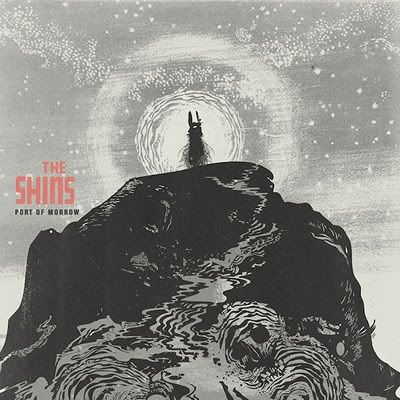
But then I heard about Port Of Morrow! Like they say, sometimes you don’t know what’s missing until it arrives. Suddenly, I had a new purpose in life: keep breathing until March 20, at which point I could buy the new album.
When the big day came, I went out and bought Port Of Morrow on my lunch break, planning to listen to it at work that afternoon. When I got back to the office, I unwrapped the CD, untwisted my headphones, and opened the disc drive, but just as I was putting the disc in, I hesitated.
This was the beginning of a long relationship, I reflected. This album and I could be together for the rest of my life. I thought back over the last five years. Other music had crossed my path, but the three Shins albums—only 32 tracks—were a constant. I always came back to them. They had been the soundtrack to my 20s.
I knew that in the coming years and decades I would listen to this album dozens or hundreds of time. But I would only listen to it for the first time once. Did I really want it to be here, clandestinely, in dry office air and synthetic fluorescent lighting?
I replaced the disc in its case and waited.
When I finally listened to the album hours later, I had mixed feelings. The opener, “The Rifle’s Spiral,” is a strong track—but it could easily be a Broken Bells track, reflecting Mercer’s new infatuation with elaborate production. Like so many tracks on this album, it lacks the innocence that made me fall in love with The Shins.
Hints of the old Shins appear here and there throughout the album, interspersed with new ideas—some good, some bad. The album has its standout tracks—namely “Bait and Switch,” “Fall of ’82,” and the lead single “Simple Song,” a deceptively complex tune that grows and evolves, well-placed near the beginning of the disc.
The ballad “It’s Only Life” doesn’t seem to have a place in the Shins catalogue at all. Mercer’s unique voice keeps it from becoming pop drivel, but the easy melody and somewhat clichéd lyrics were a little disappointing. Fortunately “For A Fool” capably fills the album’s ballad quota, with gentle jangly indie guitar work and painful revelations: “Taken for a fool,” Mercer laments, “Yes I was, and I was a fool."
The album’s biggest disappointment was the closer and title track, which left me feeling unsettled and bewildered, unlike the closers of previous albums. “The Past and Pending” from Oh Inverted World, and “A Comet Appears” from Wincing the Night Away are both such soothing tracks—slow moving, ethereal imagery, a total lack of percussion—that they give the safe sensation of being rocked gently to sleep.
I suppose that objectively speaking, this is a good album. But as with so many things in life, it was tainted by my high expectations. I guess I was hoping that when I listened to it, I would miraculously be 22 again, with all the bright-eyed bushy-tailed-ness that goes with the territory. I wasn’t.
But if I’ve lost some of the idealism and newness that first attracted me to the Shins, I’ve at least gained enough wealth to travel across the continent to see the band live!
This is not my favourite Shins album, but like you still love your least favourite child, I still have a soft spot in my heart for Port Of Morrow.
But then I heard about Port Of Morrow! Like they say, sometimes you don’t know what’s missing until it arrives. Suddenly, I had a new purpose in life: keep breathing until March 20, at which point I could buy the new album.
When the big day came, I went out and bought Port Of Morrow on my lunch break, planning to listen to it at work that afternoon. When I got back to the office, I unwrapped the CD, untwisted my headphones, and opened the disc drive, but just as I was putting the disc in, I hesitated.
This was the beginning of a long relationship, I reflected. This album and I could be together for the rest of my life. I thought back over the last five years. Other music had crossed my path, but the three Shins albums—only 32 tracks—were a constant. I always came back to them. They had been the soundtrack to my 20s.
I knew that in the coming years and decades I would listen to this album dozens or hundreds of time. But I would only listen to it for the first time once. Did I really want it to be here, clandestinely, in dry office air and synthetic fluorescent lighting?
I replaced the disc in its case and waited.
When I finally listened to the album hours later, I had mixed feelings. The opener, “The Rifle’s Spiral,” is a strong track—but it could easily be a Broken Bells track, reflecting Mercer’s new infatuation with elaborate production. Like so many tracks on this album, it lacks the innocence that made me fall in love with The Shins.
Hints of the old Shins appear here and there throughout the album, interspersed with new ideas—some good, some bad. The album has its standout tracks—namely “Bait and Switch,” “Fall of ’82,” and the lead single “Simple Song,” a deceptively complex tune that grows and evolves, well-placed near the beginning of the disc.
The ballad “It’s Only Life” doesn’t seem to have a place in the Shins catalogue at all. Mercer’s unique voice keeps it from becoming pop drivel, but the easy melody and somewhat clichéd lyrics were a little disappointing. Fortunately “For A Fool” capably fills the album’s ballad quota, with gentle jangly indie guitar work and painful revelations: “Taken for a fool,” Mercer laments, “Yes I was, and I was a fool."
The album’s biggest disappointment was the closer and title track, which left me feeling unsettled and bewildered, unlike the closers of previous albums. “The Past and Pending” from Oh Inverted World, and “A Comet Appears” from Wincing the Night Away are both such soothing tracks—slow moving, ethereal imagery, a total lack of percussion—that they give the safe sensation of being rocked gently to sleep.
I suppose that objectively speaking, this is a good album. But as with so many things in life, it was tainted by my high expectations. I guess I was hoping that when I listened to it, I would miraculously be 22 again, with all the bright-eyed bushy-tailed-ness that goes with the territory. I wasn’t.
But if I’ve lost some of the idealism and newness that first attracted me to the Shins, I’ve at least gained enough wealth to travel across the continent to see the band live!
This is not my favourite Shins album, but like you still love your least favourite child, I still have a soft spot in my heart for Port Of Morrow.

No comments:
Post a Comment